
Larissa Menescal, Brazil
Committee Chair
Larissa Menescal is an urban planner, architect, and public policy specialist with over 15 years of experience in sustainable urban development, climate resilience, multilevel governance, and gender-responsive planning. She is currently affiliated with Fortaleza’s Institute for Planning and Research (IPPLAN) and the Brazilian Network of Planning Institutes (InREDE), where she previously served as President of both institutions and led national and international collaborations across Latin America, Europe, Asia, and Africa.
Larissa’s expertise includes SDG localization, data-driven planning, institutional strengthening, and global urban agendas, including UN-Habitat, the World Urban Forum, and COP processes. As an independent consultant, lecturer, and international speaker, Larissa Menescal advances equitable, inclusive, and resilient cities through collaboration with international organizations and city networks, with a particular focus on urban development in the Global South.

Hanna Obracht-Prondzynska, Poland
Committee Co-Chair
Hanna Obracht-Prondzynska, Ph.D., M.Arch., Eng., is an urban designer and urban data scientist with a background in architecture. Hanna is a founder of URBAN.AI and an Assistant Professor and Principal Investigator at the University of Gdańsk, Department of Spatial Studies. Hanna’s research focuses on data-driven planning and geodata-based solutions for climate-responsive urban design, including the use of social media data to understand urban perception and digital applications supporting climate adaptation. Hanna has international academic and planning experience across the USA, Colombia, China, South Africa, the Netherlands, Germany, and Romania.
She holds degrees from Gdańsk University of Technology, Vienna University of Technology, and Warsaw University of Technology, where Hanna trained as a GIS analyst, and has further specialized in data science. Hanna’s PhD dissertation, defended with distinction, received eight awards, including recognition from the Polish Ministry of Economic Development, Labour and Technology and the Polish Academy of Sciences. Hanna also contributed to spatial development plans for the Pomeranian Region and the Gdańsk-Gdynia-Sopot metropolitan area and is an active ISOCARP member.
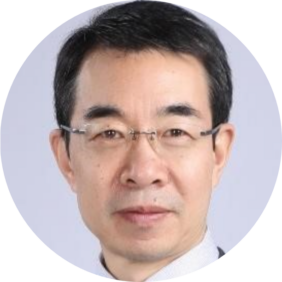
Hongyang Wang, China
Prof. Dr. WANG Hongyang, School of Architecture and Urban Planning, Nanjing University, is a leading Chinese theorist in planning philosophy and methodology, specifically the philosophy of Holism and Holistic Planning Methodology. He is awarded as a Master Designer of Jiangsu Province, and has justified his theory in over 40 strategic, master and regional plans he chaired in China, many of which awarded prizes, including the ISOCARP Awards for Excellence. He was the Chinese chair for EU FP7 project Europe-China Urban and Regional Bi-continental research Scheme, a member of UN-Habitat Expert Group to prepare the International Guidelines on Urban and Territorial Planning, and the General Rapporteur for the 53rd ISOCARP Congress “Smart Communities”.
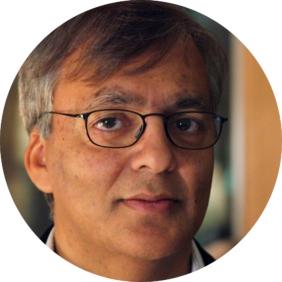
Arun Jain, USA/ India
Arun Jain is an urban designer and urban strategist with over three decades of international experience in practice, city leadership, and academia. Based in Seattle, Arun advises public and private institutions on urban development and has planned, designed, or directly influenced more than 90 projects. Arun’s work focuses on urban decision-support tools, behaviour-sensitive infrastructure strategies, and development frameworks. Arun has contributed to several UN initiatives, including the New Urban Agenda and the development of SDG 11, and has advised governments and institutions on urban policy and city development.
Jain has held academic positions at six universities, including as a DAAD-funded guest professor at the Technical University of Berlin, and served as Portland, Oregon’s first Chief Urban Designer. Arun has advised the Government of Karnataka and contributed to international boards including the International Federation of Housing and Planning. Arun holds a Bachelor’s degree in Architecture from the School of Planning & Architecture, New Delhi, and Master’s degrees in City Planning and Architecture from the University of Pennsylvania.

Tales Cardeal da Costa Cunha is an architect, urban planner, and international development professional with experience in sustainable urban development, public policy, governance, and strategic project delivery across the United States, Latin America, Europe, and Africa. Tales currently serves as a Consultant with UN-Habitat, advising on intergovernmental engagement, global urban policy, and stakeholder coordination for the World Urban Forum. Previously, Tales led policy research on Ukraine’s reconstruction and resilience at the U.S. Department of State and advised organizations on sustainable business, governance, and institutional transformation.
Tales Cunha’s expertise includes data-driven planning, policy analysis, organizational strategy, project management, and sustainable development. Tales holds a Master of International Affairs from Columbia University and a Bachelor of Architecture and Urban Planning from the Federal University of Paraná. As a lecturer and researcher, Tales has taught policy, cost-benefit analysis, entrepreneurship, and strategy, and is a recipient of the ISOCARP Young Professionals Fellowship.

Siamme Hanna Ishac, France
Siamme Hanna Ishac is an architect, urban planner, and heritage specialist with extensive experience in urban development, cultural heritage, landscape, and territorial planning in France and internationally. Hanna has held senior positions in architecture, heritage, and urban planning in the Île-de-France region and has advised cities and organizations on heritage preservation, reconstruction, and sustainable urban development across France, Lebanon, the Caribbean, and Iraq. Hanna is Vice President of ICOMOS CIVVIH and an ICOMOS expert on 20th-century architecture, intangible cultural heritage, and cultural landscapes.
Hanna Ishac’s expertise includes heritage-led urban development, historic cities, cultural landscapes, public space, reconstruction, and territorial strategies. Hanna has contributed to international research and conferences on sustainable urban development and historic cities, including the reconstruction of Beirut and the preservation of the International Fair of Tripoli in Lebanon. Hanna is also President of APACE France and works internationally on heritage programming, territorial projects, and the preservation and revitalization of cultural and urban heritage.

Yasmein Okour is an assistant professor and chair of the Department of City Planning and Design at Jordan University of Science and Technology. She holds a Ph.D. in Urban and Regional Planning from the University at Buffalo, USA, a master’s degree in Landscape Architecture from the University of Arizona, USA, and a bachelor’s degree in Architecture from Jordan University of Science and Technology, Jordan. Her research focuses on two main areas: (1) urban planning R&D frameworks and knowledge production in the Arab region, and (2) municipal environmental planning processes in Jordan, with a focus on urban resilience and municipal climate action.

Agata Krause, Germany
Agata Krause is a Senior Specialist in Partnership Development and Institutional Engagement at UN-Habitat, with a PhD in sustainability assessment and extensive experience as a researcher and policy adviser for the United Nations, European Union institutions, and other international organizations. Over the past decade, Agata has supported sustainability transformations across Member States, cities, institutions, and communities, working at the intersection of policy, partnerships, data, and sustainable development.
Agata Krause has contributed to a wide range of international publications and policy resources, including seven city profiles, three Voluntary Local Reviews, policymaker guidelines, and sustainability reports covering 56 Member States. Agata’s work focuses on accelerating sustainability transformations through innovation, strong infrastructure, quality data, effective partnerships, and strategic vision, with a particular emphasis on mobilizing stakeholders and building the collaborations needed to deliver sustainable development at scale.

Vaishali Anavatti is an urban planner and architect with over a decade of international professional and research experience across Europe, Africa, and Asia. Born and raised in India and currently based in Germany, Vaishali has worked across diverse cultural, institutional, and socio-economic contexts, including extended study and professional experience in China and multiple European countries. Vaishali’s work focuses on urban planning, climate resilience, governance, and data-driven decision-making, combining comparative perspectives across different planning systems and development conditions.
Vaishali Anavatti’s expertise includes evidence-based planning, analytical frameworks, climate adaptation, and digital urban governance. Vaishali integrates professional practice with research and has authored and co-authored publications on urban development and climate adaptation, including two papers accepted for presentation at the ISOCARP International Conference in Riyadh in 2025. Vaishali brings a hybrid practitioner–researcher perspective and an international outlook to advancing planning knowledge and strengthening dialogue between research and practice.

Dr Luisa Bravo is a distinguished public space scholar, activist, and cultural entrepreneur who brings more than two decades of expertise as both an academic and practitioner. Her work has taken her to over 30 countries, where she has conducted research and lectured at leading universities while contributing to major UN summits, such as Habitat III and the World Urban Forum. In 2013, she founded the non-profit organization City Space Architecture, through which she has launched groundbreaking initiatives such as The Journal of Public Space, the Public Space Academy, and the Public Space Museum based in Bologna, Italy. Her leadership has also led to strategic collaborations with UN-Habitat and the Davos Baukultur Alliance of the World Economic Forum.
Through her interdisciplinary work that connects academia, policy, and practice, Dr Bravo has become a prominent voice championing public space culture and civic participation via research, education, and global cooperation. She serves European and international institutions as an expert evaluator and advisor, contributing her expertise to programs including Horizon Europe, EIT Culture & Creativity, Safe and Sound Cities, Fulbright Commission and the Global Platform for the Right to the City. Dr Bravo also holds the position of Adjunct Professor of Urban Design at the University of Florence in Italy.
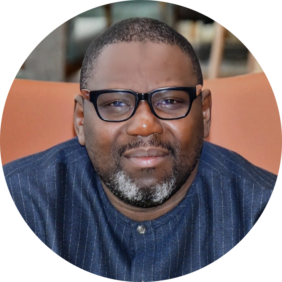
Ale Badera Sy, Senegal
Alè Badara Sy is an expert in urban climate action, green city development, and affordable housing policies, with over 20 years of experience in urban planning, public policy, and international development across Africa. Alè currently serves as Technical Advisor for Urban Planning and Regional Development to the Prime Minister of Senegal, having previously served as Chief Technical Advisor and National Coordinator for the affordable housing project at the Ministry of Urban Planning. Alè has also worked with the Global Green Growth Institute (GGGI), the United Nations system, the World Bank, and multinational firms, supporting sustainable and innovative urban solutions across more than 10 countries in West and East Africa.
His expertise includes urban climate action, sustainable development, affordable housing, and the development of global, regional, and national urban strategies. Alè is a lecturer and author of publications for Cities Alliance, the African Development Bank, the United Nations One Planet Network, and GGGI, and is a long-standing member of the International Society of City and Regional Planners (ISOCARP). Alè is also the founding President of the Club de Réflexion sur l’Urbain, a Senegalese think tank specializing in urban issues, and works to advance sustainable and inclusive urban development across Africa.
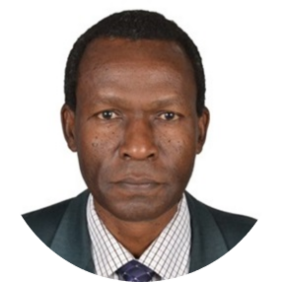
Mairura Omwenga is a civil and structural engineer, town planner, and Environmental Impact Assessment (EIA) expert with 37 years of professional experience across engineering, urban planning, infrastructure, and environmental assessment. Mairura holds a BSc in Civil Engineering and an MA in Urban and Regional Planning from the University of Nairobi and is currently pursuing PhD research in transportation planning. Mairura is also a transport and infrastructure lecturer at the University of Nairobi’s Faculty of the Built Environment and Design, with experience spanning the public and private sectors, academia, research, and consultancy.
Mairura’s has led multidisciplinary and multi-agency projects supported by the private sector, the World Bank, and the African Development Bank. Mairura is Chairman of the Town and County Planners Association of Kenya (TCPAK) and a member of the Architectural Association of Kenya, ISOCARP, the Royal Town Planning Institute (RTPI), and the Institution of Engineers of Kenya. As a registered EIA lead expert with Kenya’s National Environment Management Authority, Mairura brings extensive expertise in integrated planning, infrastructure, transport, and sustainable urban development.

Tianren Yang is an urban planner and researcher specializing in urban analytics, modelling, and integrated planning, with international academic and professional experience in China, the UK, and Hong Kong. Tianren is currently Assistant Professor and Assistant Head of Outreach and Communications at the University of Hong Kong, and a Research Fellow at its Urban Systems Institute. Tianren previously worked at the University of Cambridge and has provided consultancy to organizations including the China Development Bank and the China Academy of Urban Planning and Design.
Tianren’s expertise includes computational urban modelling, digital-physical interactions, land use and transport planning, mobility, and sustainable urban development. Tianren has published more than 50 peer-reviewed articles and contributed to international urban policy research, including work for the International Science Council and UN-related initiatives. Recognized through the Forbes 30 Under 30 China list and multiple planning awards, Tianren has also served as a lecturer in UN-Habitat’s Global Urban Lecture Series.
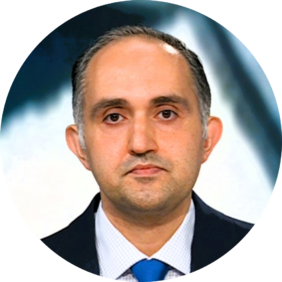
Ehsan Noroozinejad, Australia
Dr Ehsan Noroozinejad Farsangi is a researcher and academic specializing in smart, resilient construction and infrastructure, with international experience across Australia, Canada, the UK, and China. Ehsan currently serves as Global Challenge Lead on Sustainable Futures and Senior Academic at Western Sydney University’s Urban Transformations Research Centre, and as Technical and Operational Managing Director of the SEU-Leeds Joint Research Lab on Intelligent and Resilient Infrastructure. Ehsan is also Founder and Director of the Resilient Structures Research Group.
Ehsan Noroozinejad Farsangi’s expertise includes resilience-based design, smart materials and structures, artificial intelligence, construction robotics, digital twins, and climate-responsive infrastructure. Ehsan has authored more than 150 peer-reviewed papers, published eight books, secured patents, and serves as Associate Editor for several international journals. Ehsan leads research on innovative, affordable, and climate-friendly housing and contributes to major initiatives advancing sustainable and resilient urban development.